
Introduction
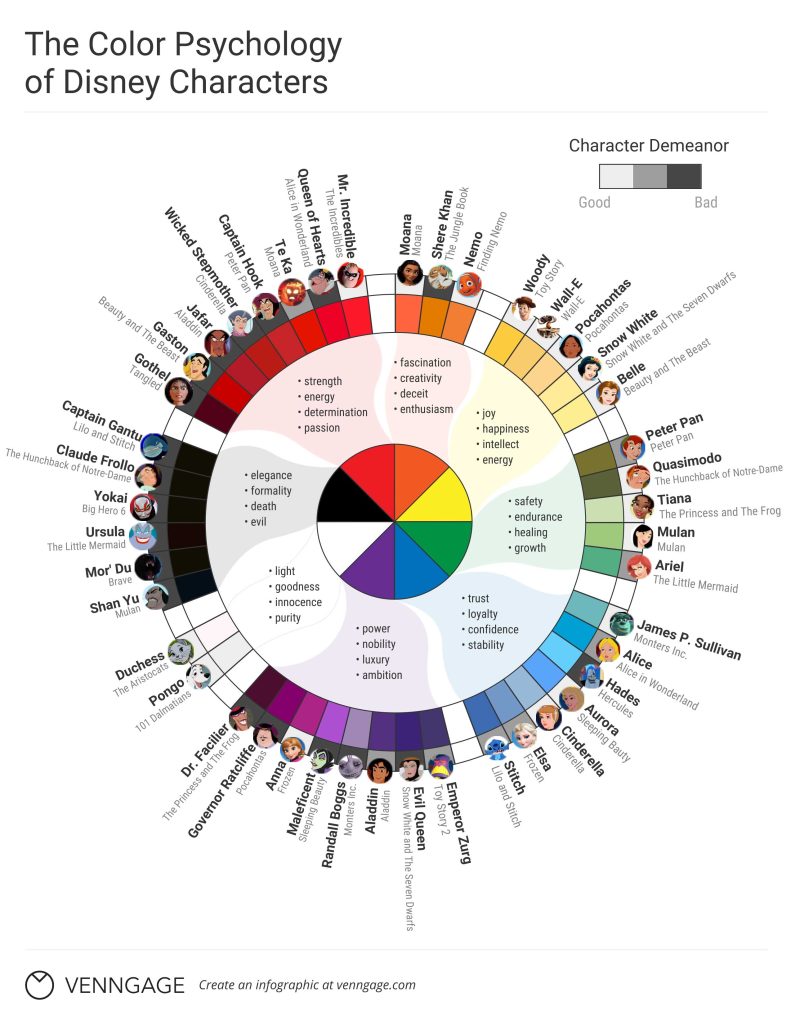
Have you ever wondered about Disney color theory? After all, every single Disney animated feature film, starting with Snow White and the Seven Dwarfs, includes loads of color. It’s basically Disney Animation Studios’ signature storytelling tool! It’s a way to show emotion, set the mood, and bring each character and world to life. Disney also uses typography, too, which you can read about here! But today, we will talk about how Disney uses color theory in their movies and characters. Before we get started, have a look at the embedded image below to see the color psychology of Disney characters.
What is Color Theory?
Color theory is the study of how colors interact with each other and how they can be combined to create visually pleasing designs. It is both a science and an art, explaining the relationships between colors, how they can be mixed or contrasted, and the psychological effects they have on people. It also helps guide designers in choosing color schemes that enhance aesthetics, evoke emotions, and improve visual communication.
How is Color Theory useful?
For one, color theory can guide you in using contrasting colors to grab your audience’s attention or striking a color balance for enduring visual appeal. Color harmony can also be a valuable aspect of color theory, supporting user workflows and making it easier to scan content and navigate your product’s UI. The right color palette can help you showcase your brand personality, message, and mood.
How is Disney Color Theory used?
Disney color theory is used deliberately to tell stories without words. From Snow White’s yellow dress to Elsa’s ice blue gown, these color choices shape how audiences feel about characters and scenes. Another example is in the movie Aladdin. The color palette of Disney’s Aladdin is fairly unusual, since it mainly comprises the three primaries: red, blue, and yellow. Disney not only makes that work, but they also use the colors as a clever storytelling device. In a YouTube video titled “What Artists Can Learn from Aladdin’s Incredible Color” (embedded below) by J. Holt the Illustrator, J. Holt states, “animators built an entire movie off the most difficult to work with colors, with beautiful results.”
Warm and Cool Colors
Now, we will talk about warm and cool colors in Disney color theory. Warm colors include red, orange, and yellow. These hues convey energy, passion, and excitement. Classic Disney princesses typically wore warm colors in at least one scene. Snow White’s yellow gown and Cinderella’s pink ball gown followed this pattern. Belle wore gold in Beauty and the Beast’s ballroom scene. Cool colors encompass blue, green, and purple. These shades create feelings of calmness or sometimes distance. Villains often wore cool colors mixed with black to establish their threatening nature. Maleficent’s purple and black costume in Sleeping Beauty exemplified this approach. Ursula in The Little Mermaid combined purple with darker tones.
What Disney movie used warm and cool colors?
The Lion King used warm, earthy tones like golds and oranges. These colors created warmth and nostalgia for the Pride Lands. Dark colors like greens and blacks conveyed danger during threatening scenes, while Inside Out took an explicit approach to color coding emotions. Joy appeared in yellow, Sadness in blue, Anger in red. Fear wore purple and Disgust appeared in green, creating instant visual understanding.
Cultural Evolution in Color Usage
Disney’s approach to color theory evolved beyond Western color interpretations. Mulan represented the studio’s first serious attempt to incorporate Chinese color symbolism, and production designers studied traditional Chinese art extensively. Encanto integrated Colombian color traditions into every frame. The vibrant palette reflected Colombian culture authentically. Production teams consulted cultural experts throughout development. Raya and the Last Dragon incorporated Southeast Asian color traditions. Each region employed distinct palettes that represented different cultures. This approach required months of research and consultation.
Conclusion
In conclusion, Disney Animation Studios uses color theory by using a mix of warm and cool colors, while also incorporating cultural colors.